
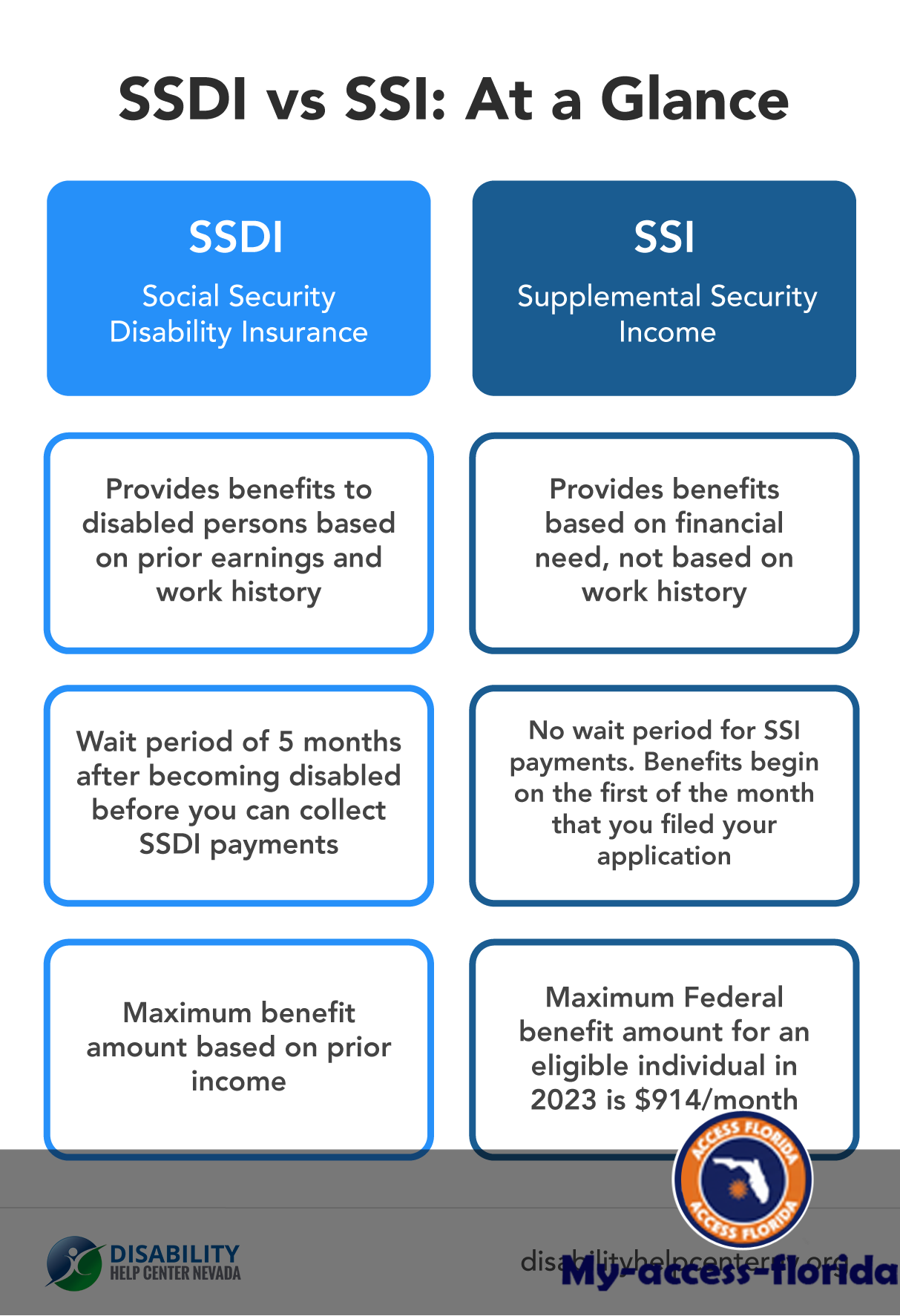
En Florida, es importante comprender las diferencias entre el Seguro de Discapacidad del Seguro Social (SSDI) y el Suplemento de Seguridad de Ingreso (SSI) al considerar los beneficios por discapacidad. Ambos programas están diseñados para ayudar a las personas con discapacidades, pero tienen requisitos y criterios de elegibilidad distintos. En esta guía, exploraremos las diferencias clave entre el SSDI y el SSI en Florida, para que puedas tomar decisiones informadas sobre tus beneficios por discapacidad.
Social Security Disability (SSDI)
Social Security Disability (SSDI) is a federal program designed to provide financial assistance to individuals who are unable to work due to a disability. To qualify for SSDI benefits, applicants must have a medical condition that meets the Social Security Administration’s (SSA) definition of disability. Additionally, applicants must have worked and paid into the Social Security system for a certain number of years to be eligible for benefits.
Eligibility Criteria for SSDI in Florida
In Florida, the eligibility criteria for SSDI benefits are the same as in other states. Applicants must have a qualifying medical condition that prevents them from engaging in substantial gainful activity. Additionally, applicants must have a work history that shows they have paid into the Social Security system. The SSA will review the applicant’s medical records and work history to determine eligibility for SSDI benefits.

Eligibility Criteria for SSDI in Florida
Social Security Disability Insurance (SSDI) provides financial assistance to individuals who are unable to work due to a disability. To qualify for SSDI in Florida, applicants must meet certain eligibility criteria set by the Social Security Administration. These criteria include having a medical condition that meets the SSA’s definition of disability, being unable to engage in substantial gainful activity, and having earned enough work credits through previous employment.
Medical Condition
To be eligible for SSDI in Florida, individuals must have a medical condition that is expected to last at least one year or result in death. The condition must be severe enough to prevent the applicant from engaging in substantial gainful activity. Additionally, the SSA maintains a list of impairments that automatically qualify individuals for SSDI benefits if their condition meets the criteria outlined in the listing.
Work Credits
Work credits are earned based on the individual’s work history and the amount of Social Security taxes paid. In general, applicants must have accumulated a certain number of work credits to be eligible for SSDI benefits. The number of work credits required depends on the age of the applicant at the time they became disabled. For example, younger workers may need fewer work credits to qualify for SSDI compared to older individuals.
Social Security Disability (SSDI)
Application Process for SSDI Benefits
When applying for **Social Security Disability Insurance (SSDI)** benefits, it is crucial to follow a structured process to increase the chances of a successful claim. The first step is to gather all necessary documentation, including medical records, work history, and other relevant information. Next, you can choose to apply online through the **Social Security Administration’s** website or by scheduling an appointment to apply in person at your local office.
After submitting your application, the **SSA** will review your case to determine if you meet the eligibility criteria for **SSDI** benefits. This review process may take several months, during which the **SSA** may request additional information or medical exams. It is essential to stay informed about the status of your application and promptly provide any requested documentation to avoid delays in the decision.
Understanding Supplemental Security Income (SSI)
Overview of Supplemental Security Income (SSI)
Supplemental Security Income (SSI) is a federal program designed to provide assistance to aged, blind, and disabled individuals with limited income and resources. Unlike Social Security Disability Insurance (SSDI), SSI is a needs-based program that doesn’t require work history for eligibility.
Benefits and Eligibility for SSI
To qualify for SSI benefits, individuals must meet certain income and resource limits set by the Social Security Administration. The amount of monthly SSI payments can vary based on factors such as living arrangements and other sources of income. Additionally, individuals must meet specific disability criteria to be eligible for SSI benefits.

Qualifications for SSI in Florida
Supplemental Security Income (SSI) is a federal program designed to assist individuals with limited income and resources who are unable to work due to a disability. In Florida, to qualify for SSI benefits, individuals must meet certain criteria set forth by the Social Security Administration (SSA).
Income and Resource Limits
One of the key qualifications for SSI in Florida is meeting the income and resource limits established by the SSA. The income limits consider both earned and unearned income, while the resource limits include assets such as property, bank accounts, and investments.
Disability Criteria
In addition to the financial requirements, individuals applying for SSI in Florida must meet the disability criteria defined by the SSA. This includes having a medical condition that prevents them from engaging in substantial gainful activity and is expected to last for at least 12 months or result in death.
Differences Between SSDI and SSI in Florida
Understanding the Differences: Social Security Disability Insurance (SSDI) and Supplemental Security Income (SSI) are two programs administered by the Social Security Administration in the United States. While both programs provide financial assistance to individuals with disabilities, there are key differences between them.
SSDI Eligibility: SSDI is available to individuals who have worked and paid Social Security taxes for a certain number of years. The amount of benefits is based on the individual’s work history and earnings record.
SSI Qualifications: SSI, on the other hand, is a needs-based program that provides financial assistance to disabled individuals with limited income and resources. Eligibility is not based on work history, but rather on financial need.
Distinguishing Features: While both programs provide financial assistance to disabled individuals, it is important to understand the different eligibility criteria and benefits of SSDI and SSI. Consulting with a Social Security attorney or representative can help individuals determine which program they may qualify for and navigate the application process effectively.
How to Appeal a Denied SSDI or SSI Claim
Understanding the Appeals Process
When your SSDI or SSI claim is denied, you have the right to appeal the decision. The appeals process involves several stages, including reconsideration, a hearing before an administrative law judge, and further reviews by the Appeals Council. It’s crucial to follow the specific steps outlined by the Social Security Administration to ensure your appeal is processed correctly.
Gathering Supporting Documentation
One key aspect of appealing a denied SSDI or SSI claim is providing additional evidence to support your case. This may include medical records, treatment history, statements from healthcare providers, and any other relevant documentation. By presenting a strong case with compelling evidence, you increase your chances of a successful appeal and obtaining the benefits you deserve.