
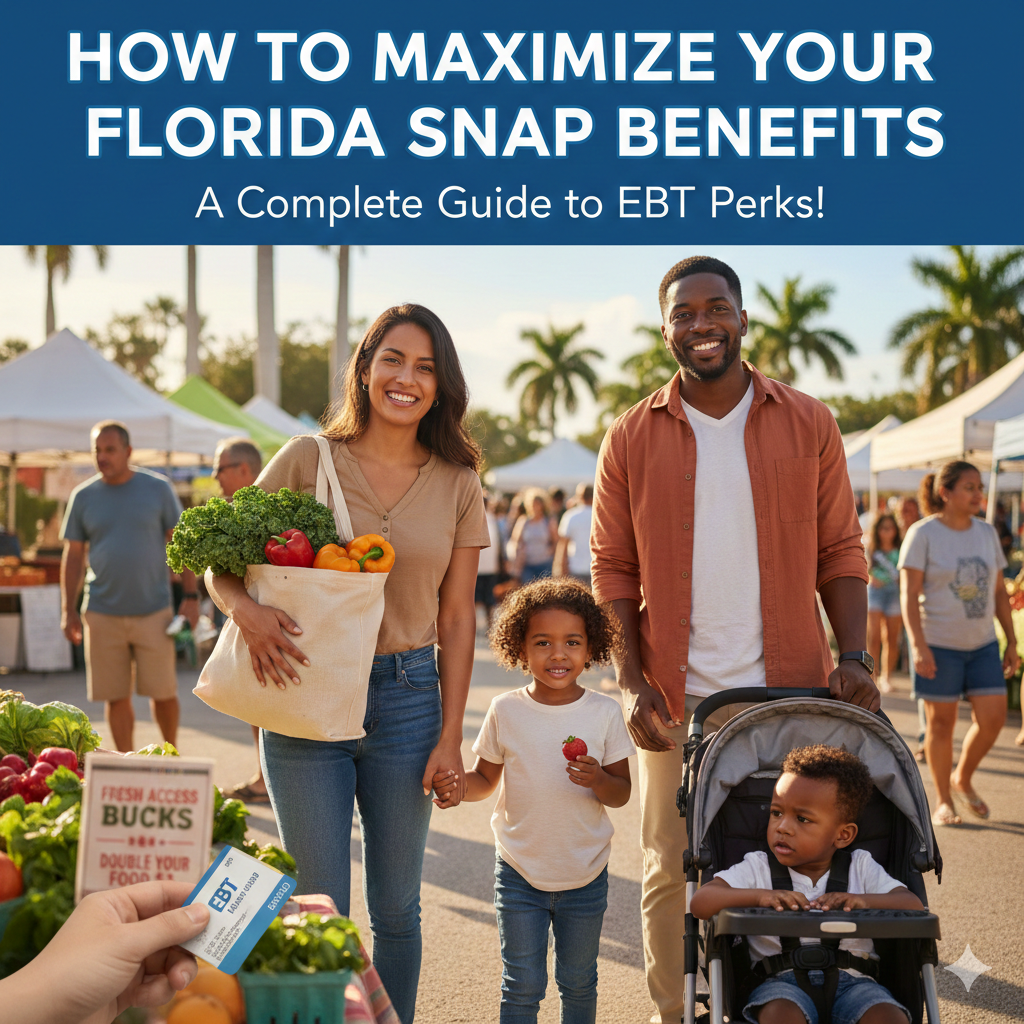
How to Maximize Your Monthly SNAP Benefits in Florida: A Complete Guide
The Supplemental Nutrition Assistance Program (SNAP), managed by ACCESS Florida, is a vital lifeline for thousands of families in the Sunshine State. However, many households receive the “minimum” benefit because they don’t fully understand how the Department of Children and Families (DCF) calculates their allotment.
If you are looking to stretch your food budget, this guide will show you exactly how to maximize your monthly SNAP benefits in Florida. By understanding legal deductions, household compositions, and reporting changes correctly, you can ensure you receive every dollar you are entitled to under federal and state law.
Understanding the SNAP Formula in Florida
To maximize your benefits, you first need to understand the “30% Rule.” The USDA assumes that a SNAP household will spend 30% of its net income on food.
The formula used by ACCESS Florida is:
Maximum Allotment for Household Size – (30% of Net Monthly Income) = Your Monthly Benefit.
Therefore, the key to maximizing your SNAP is lowering your Net Income through documented deductions.
Report All Allowable Deductions (The Secret to Higher Benefits)
Many Florida residents fail to report specific expenses that “lower” their countable income in the eyes of the DCF. The lower your net income, the higher your EBT deposit.
A. Excess Shelter Costs
The most significant deduction for most Floridians is the Excess Shelter Deduction. If your housing costs (rent, mortgage, property taxes, and home insurance) exceed half of your adjusted income, you can deduct that “excess” amount (up to a certain cap, unless a household member is elderly or disabled).
B. The Standard Utility Allowance (SUA)
In Florida, if you pay for heating or cooling (AC) separately from your rent, you qualify for the Standard Utility Allowance. Even if your actual bills are lower in some months, using the SUA can significantly boost your benefit amount because it provides a fixed, high deduction.
C. Medical Expenses for Elderly or Disabled Members
If someone in your household is 60 or older, or receives disability benefits, you can deduct unreimbursed medical expenses that exceed $35 per month. This includes:
-
Prescription medications and over-the-counter supplies.
-
Co-pays for doctor visits or hospital stays.
-
Transportation costs to the pharmacy or doctor.
-
Service animal expenses (food, vet bills).
-
Dental care and eyeglasses.
D. Dependent Care Costs
Are you paying for childcare so you can work, look for work, or attend training? You can deduct the entire cost of that care. This includes daycare, after-school programs, and even transportation to these facilities.
Optimizing Your Household Composition
Who you include in your “SNAP Household” changes your maximum allotment. In Florida, a household is generally defined as people who “live together and purchase and prepare meals together.”
-
Roommates: If you live with others but buy and cook your food separately, you may be able to apply as a separate household. This often results in higher combined benefits than applying as one large group.
-
Elderly Parents: If you live with an elderly parent who cannot prepare their own meals due to a disability, they may be considered a separate household even if you cook for them, provided your income is within specific limits.
Stay Updated on the 2026 Income Limits and Allotments
The USDA adjusts SNAP maximum allotments every year (Cost of Living Adjustment or COLA). To maximize your benefits, you must ensure your ACCESS Florida account reflects the most recent 2026 figures.
| Household Size | Maximum Monthly Allotment (Estimated 2026) |
| 1 | $292 |
| 2 | $536 |
| 3 | $768 |
| 4 | $975 |
| 5 | $1,158 |
Note: These figures are subject to change based on federal updates. Always check the official MyAccessFlorida portal for the current year’s specific caps.
Leverage “Broad-Based Categorical Eligibility” (BBCE)
Florida utilizes BBCE, which means that if you receive a non-cash TANF-funded service (like a brochure or informational flyer from DCF), your asset limit is waived or increased. This allows you to have some savings in the bank without being disqualified from SNAP, helping you maintain financial stability while still receiving food assistance.
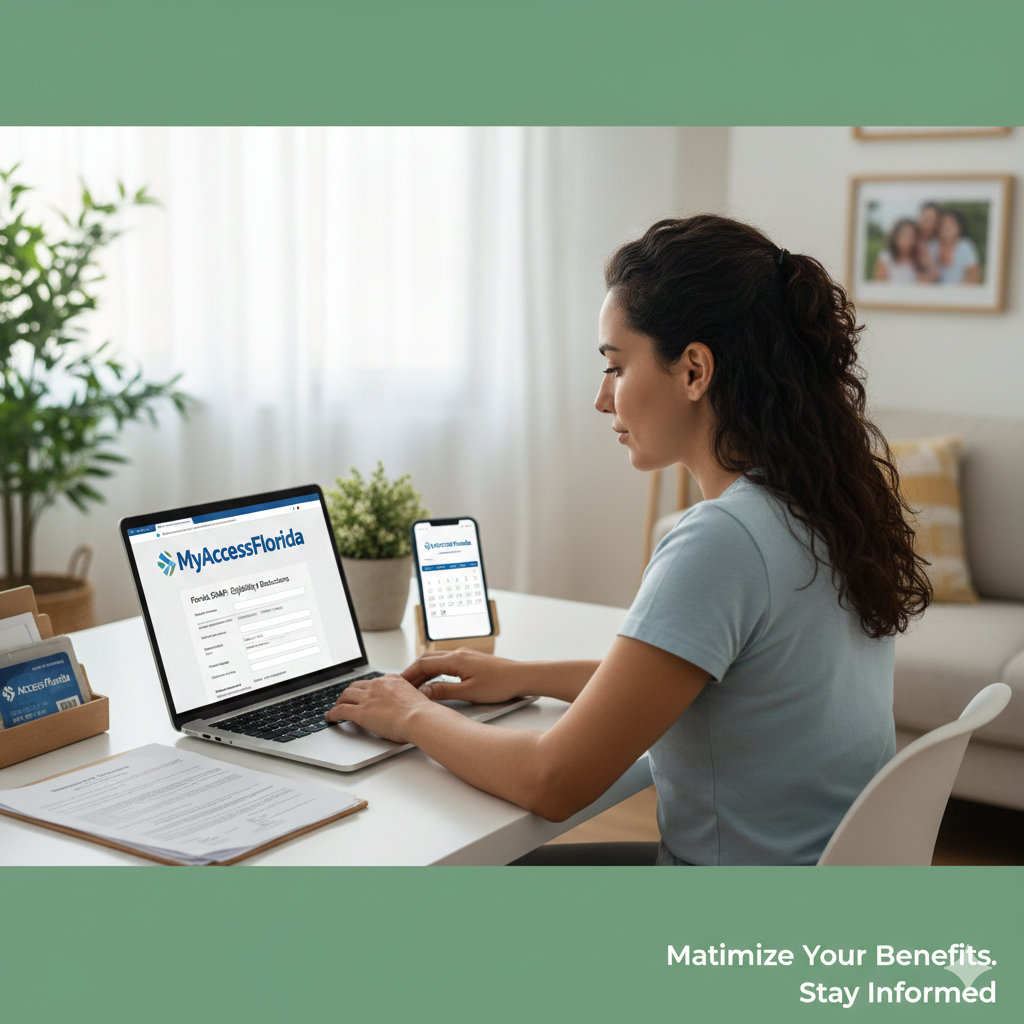
How to Use the MyAccessFlorida Portal Effectively
Your My Access Florida account is your primary tool for maximization.
-
Report Income Drops Immediately: If your hours are cut at work, report it within 10 days. Don’t wait for your renewal.
-
Upload Documents Promptly: Use the “Document Upload” feature for rent receipts and medical bills. If DCF doesn’t see the proof, they won’t apply the deduction.
-
Check for “Interim Reports”: Missing an interim report is the #1 reason benefits are slashed or stopped in Florida.
Beyond the EBT Card: Hidden Benefits of SNAP in Florida
Maximizing SNAP isn’t just about the dollar amount on the card; it’s about the “EBT Perks” that save you money elsewhere, effectively increasing your household’s purchasing power.
A. Fresh Access Bucks (Double Your Money)
Florida participates in the Fresh Access Bucks (FAB) program. At participating farmers’ markets and some grocery stores, for every $1 you spend on Florida-grown produce using your EBT card, you get $1 FREE to spend on more fruits and vegetables (usually up to a $20 limit per day). This literally doubles your SNAP budget.
B. Amazon and Walmart Online Shopping
You can use your Florida EBT card to shop online at Amazon, Walmart, and Aldi. This helps you compare prices and use digital coupons to stretch your benefits further than at a traditional convenience store.
C. Discounted Utilities and Internet
Having an active SNAP case in Florida makes you eligible for:
-
Lifeline Program: Discounted phone service.
-
Affordable Connectivity Program (ACP) Alternatives: Many Florida ISPs offer $10/month internet for SNAP recipients.
D. Free Museum Admission
Through the “Museums for All” initiative, your Florida EBT card grants you free or deeply discounted ($3) admission to over 1,000 museums, science centers, and zoos across the state, including many in Orlando, Miami, and Tampa.
Common Pitfalls That Lower Your Benefits
-
The “Gross Income” Trap: If your gross income is even $1 over the limit, your case will be denied, regardless of your expenses. Always track your gross pay before taxes.
-
Failing to Report Rent Increases: If your landlord raises your rent, report it! That increase could trigger a higher “Excess Shelter Deduction.”
-
Ignoring Work Requirements: Florida has strict work requirements for Able-Bodied Adults Without Dependents (ABAWDs). Failing to meet these can result in a loss of benefits after 3 months.
Frequently Asked Questions (FAQ)
Does Florida have a maximum asset limit for SNAP?
Due to BBCE, most households in Florida do not have a traditional asset limit (savings/checking) unless a member has been disqualified for an intentional program violation. However, high-value assets may still be scrutinized.
Can I get more SNAP if I am homeless in Florida?
Yes. Florida offers a Homeless Shelter Deduction for individuals who have some housing costs but lack a fixed nighttime residence. This is often easier to claim than itemized rent.
What should I do if my benefits are reduced?
Check your Notice of Case Action in the MyAccessFlorida portal. It will list the income and expenses used. If the rent or medical expenses are wrong, you can request a Fair Hearing or submit a change report with the correct documents.
Maximizing your monthly SNAP benefits in Florida requires being proactive. Don’t just “apply and forget.” You must be diligent about reporting your expenses—especially utilities, medical costs, and childcare. By utilizing programs like Fresh Access Bucks and ensuring every legal deduction is applied to your case, you can significantly increase your family’s food security.
Pro Tip: Always keep copies of every document you upload to the ACCESS Florida system. If a deduction is missed, your paper trail is your best tool for an appeal.